Did You Know?
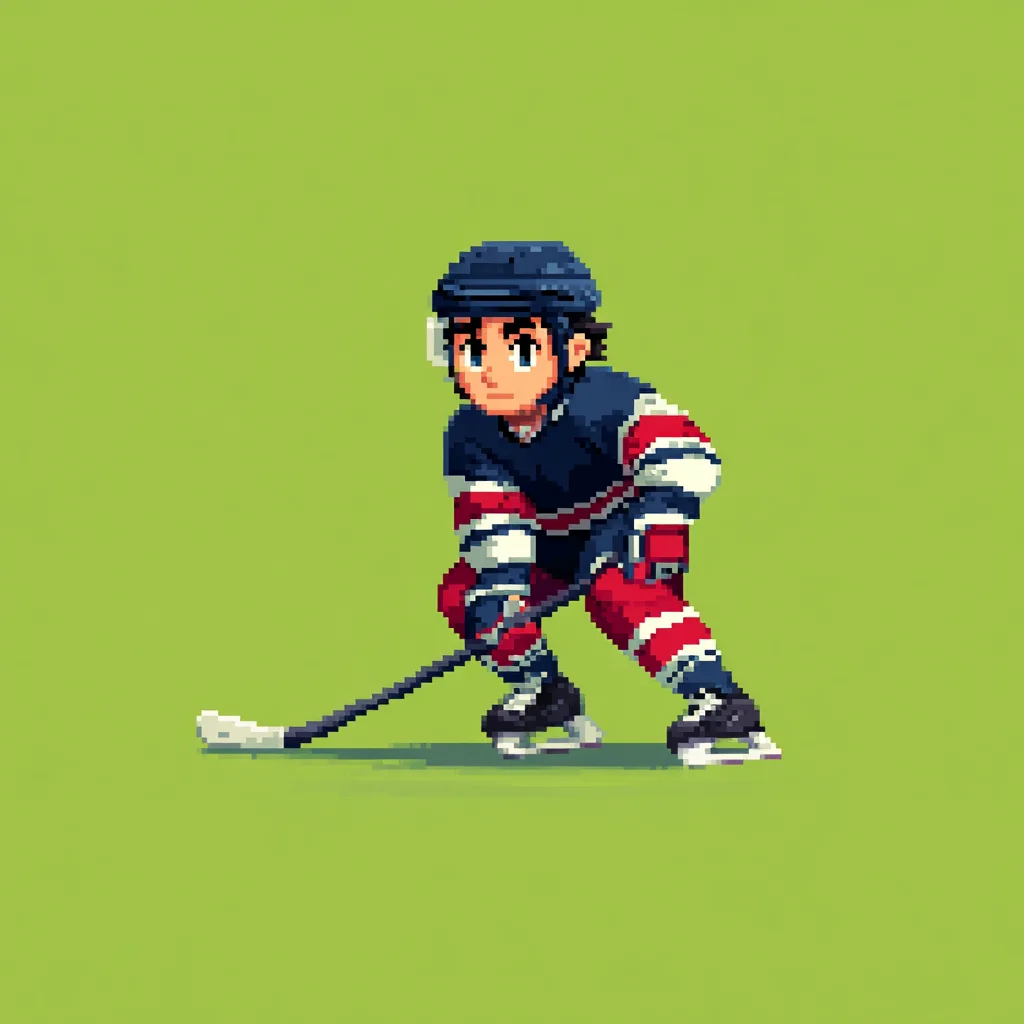
Skating Biomechanics
Unlock the physics of the perfect stride. Learn how edge control, deep knee bend, and recovery mechanics maximize your on-ice speed and agility.
Elite skaters return their recovery skate directly under their center of gravity to eliminate lateral sway and minimize energy loss between pushes.
A standard hockey blade is only about 3 millimeters wide, making your ankle angle the single most critical factor in determining turning radius and grip.
Biomechanical studies reveal that the inside leg's under-push generates up to 60 percent of a player's total acceleration during a high-speed crossover.
01. The Power Stride
A powerful forward stride generates speed by pushing outward at a 45-degree angle, not straight back. A deep knee bend loads your quadriceps and glutes to maximize the kinetic force transferred directly into the ice.
02. Friction and Edge Control
Skating relies on manipulating friction by precisely shifting your weight over the blade's inside or outside edge. The pressure from your skate actually melts a microscopic layer of ice, creating a temporary water track for a frictionless glide.
03. Crossover Acceleration
Crossovers allow players to maintain and gain speed through sharp turns by keeping both legs continuously active. The outside leg pushes off its inside edge, while the inside leg executes a powerful under-push using the outside edge.